
The IRD has just released its new kilometre rates for the 2026 income year, and you’ll be able to claim more than you could last year.
The new rates are relevant to you whether you’re:
- An employee being reimbursed for work-related travel
- A business owner
- Self-employed
- A contractor
- A rental property owner using your vehicle for deductible travel
The rates have increased across all vehicle categories, including petrol, diesel, hybrid and electric vehicles.
What’s Changed?
Here’s how the Tier 1 rates compare with last year:
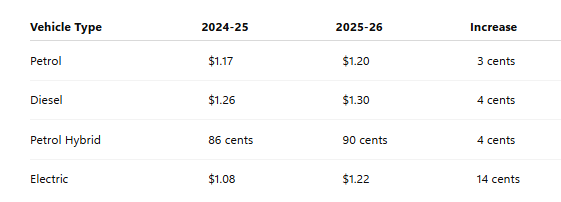
The biggest winner this year is electric vehicles.
- The Tier 1 rate has increased 14 cents, an increase of almost 13%.
- The Tier 2 rate increased 4 cents from, an increase of more than 21%.
To put that into perspective, if you travel 10,000 business kilometres in an electric vehicle, that’s an additional $1,400 deduction compared to last year.
Not life-changing money, but certainly worth claiming correctly.
What Are The IRD Kilometre Rates?
The kilometre rate method allows eligible taxpayers to claim a set amount per business kilometre travelled instead of tracking actual vehicle expenses such as:
- Fuel
- Insurance
- Registration
- Repairs and maintenance
- Depreciation
For many sole traders, self-employed contractors and rental property owners, this is the simplest way to claim vehicle expenses.
Who Can Use The Kilometre Rate Method?
The kilometre rate method is commonly used by:
- Sole traders
- Self-employed contractors
- Rental property owners
- Partnerships
- Some shareholder-employees
- Employers reimbursing employees who use their personal vehicles for work
However, not everyone qualifies.
If a vehicle is owned by a company, the actual cost method is often more appropriate.
The right answer depends on your circumstances.
2026 Is A Big Year For Vehicle Tax Rules
The new kilometre rates aren’t the only vehicle-related tax development this year.
Budget 2026 also announced proposed reforms to the Fringe Benefit Tax (FBT) rules for work vehicles.
The proposals aim to simplify compliance by introducing clearer vehicle categories and reducing some of the record-keeping requirements currently faced by employers.
While these changes are not yet law, they signal a broader move towards simplifying vehicle tax compliance.
For business owners, that’s a positive step.
Want To Learn More About Vehicle Expense Claims?
The new kilometre rates are only one part of the picture.
If you’re unsure whether you should use kilometre rates or the actual cost method, or want to understand what vehicle expenses are deductible in New Zealand, I’ve covered that in detail in my article:
Claiming Car Expenses: What IRD Lets You Deduct (and What It Doesn’t)
In that guide, you’ll learn:
- What vehicle expenses you can claim
- What you can’t claim
- The difference between kilometre rates and actual costs
- Common mistakes that trigger IRD scrutiny
- How to maximise your vehicle deductions legally
Claiming Car Expenses: What IRD Lets You Deduct (and What It Doesn’t)
About
Specialist property accountants for New Zealand investors and businesses.